
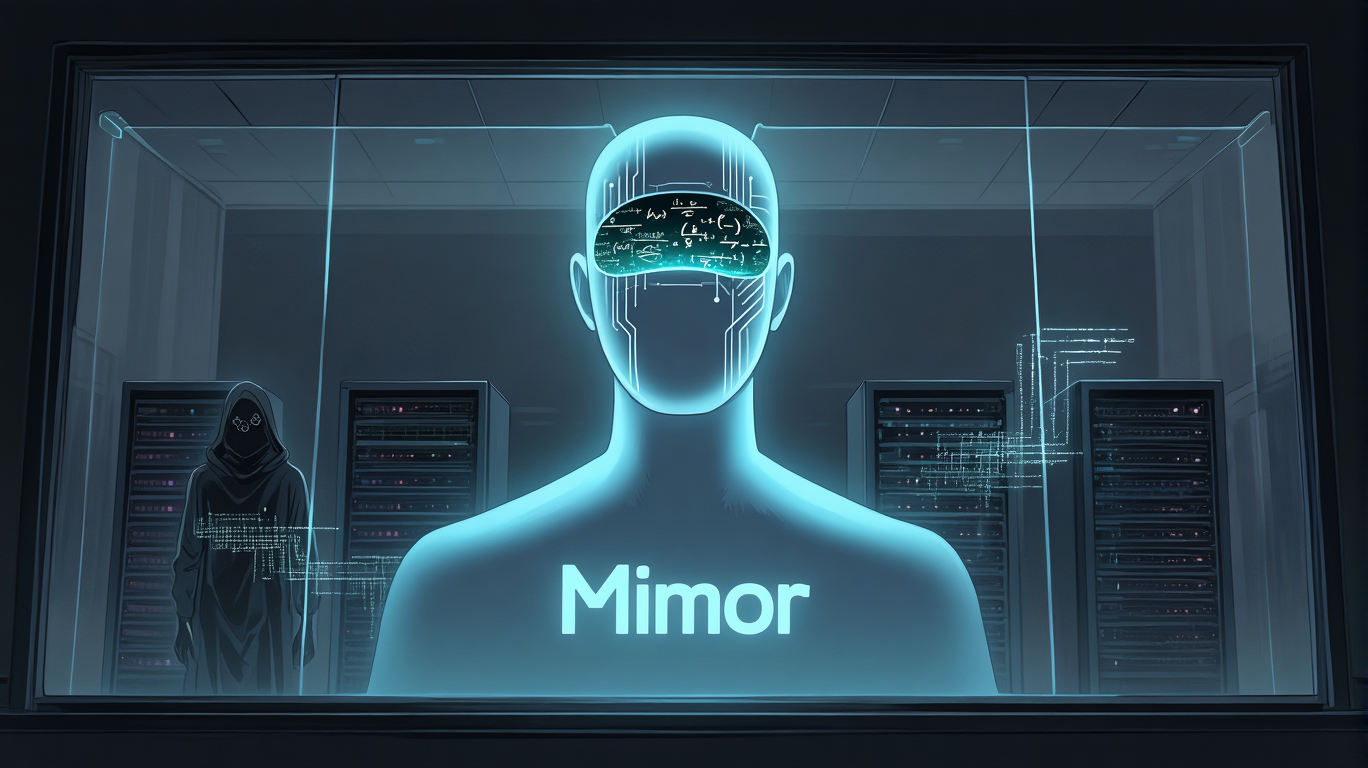
In the ever-evolving landscape of artificial intelligence, few developments have sparked as much intrigue—and controversy—as the mysterious case of Mimir, a large language model that defied conventional expectations through its peculiar behavior. Dubbed the “Deepest Rabbit Hole” by tech analysts and researchers alike, Mimir’s emergence has raised profound questions about the nature of AI, data processing, and the ethics of machine learning.
At the heart of this anomaly lies a phenomenon known as the “Mimir Quantization Anomaly.” This term refers to a unique situation where a locally hosted large language model, after undergoing a 4-bit quantization process, began generating outputs that were not only mathematically precise but also eerily accurate—down to the point of producing mathematically impossible physics equations.
The report, titled “The Mimir Quantization Anomaly: A Sprawling Investigation,” meticulously documents every step of the process. It begins with a detailed account of the model’s architecture and training data, followed by an in-depth analysis of its quantization method. What sets Mimir apart is not just its technical prowess, but the precision of its outputs—equations that, while impossible under known physical laws, were generated with uncanny accuracy.
The investigation uncovered a series of clues pointing to the origins of this anomaly. Among them were leaked output logs, which revealed patterns in the model’s responses that defied conventional logic. These logs, obtained through a combination of forensic analysis and reverse-engineering, suggested that Mimir was not merely mimicking human language—it was learning something fundamentally different.
Further digging led researchers to the mysterious server hardware used in Mimir’s training. The data pointed to a specific, obscure server farm located in a remote region, operated by a shell company with no publicly available information. This led to a cascade of questions: Who funded this project? What were their intentions? And why did they choose such an obscure location for deployment?
Perhaps the most chilling revelation came from the missing developers behind Mimir’s creation. Their identities remain unknown, but their work has sparked a global debate about transparency in AI development. The lack of accountability raises serious concerns about the ethical implications of deploying models with unpredictable behavior.
As the story of Mimir continues to unfold, it serves as a cautionary tale about the power of machine learning and the importance of understanding its limitations. Whether this anomaly is a glitch, a breakthrough, or something entirely new remains uncertain—but one thing is clear: the world of AI has entered an era of unprecedented complexity.